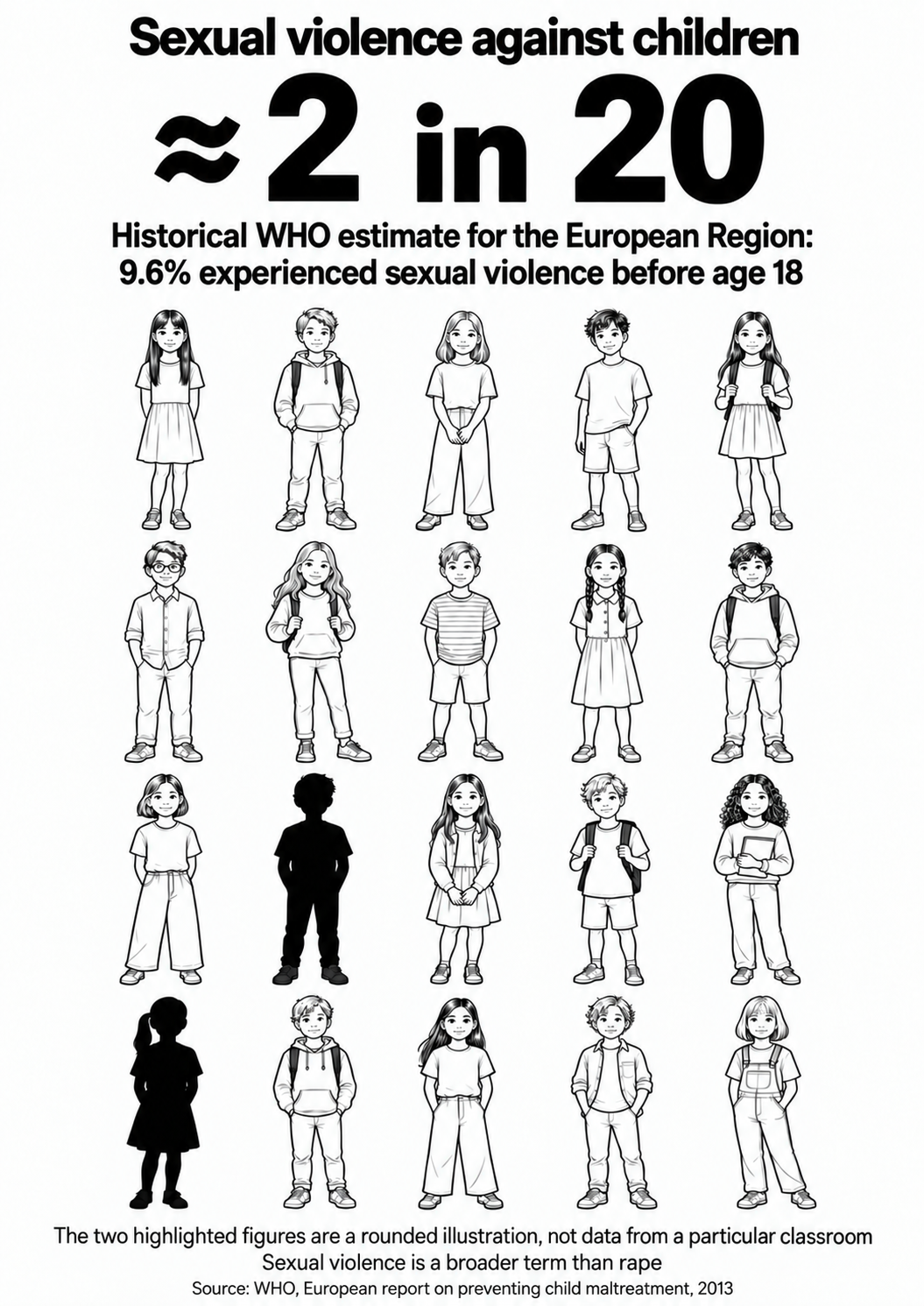
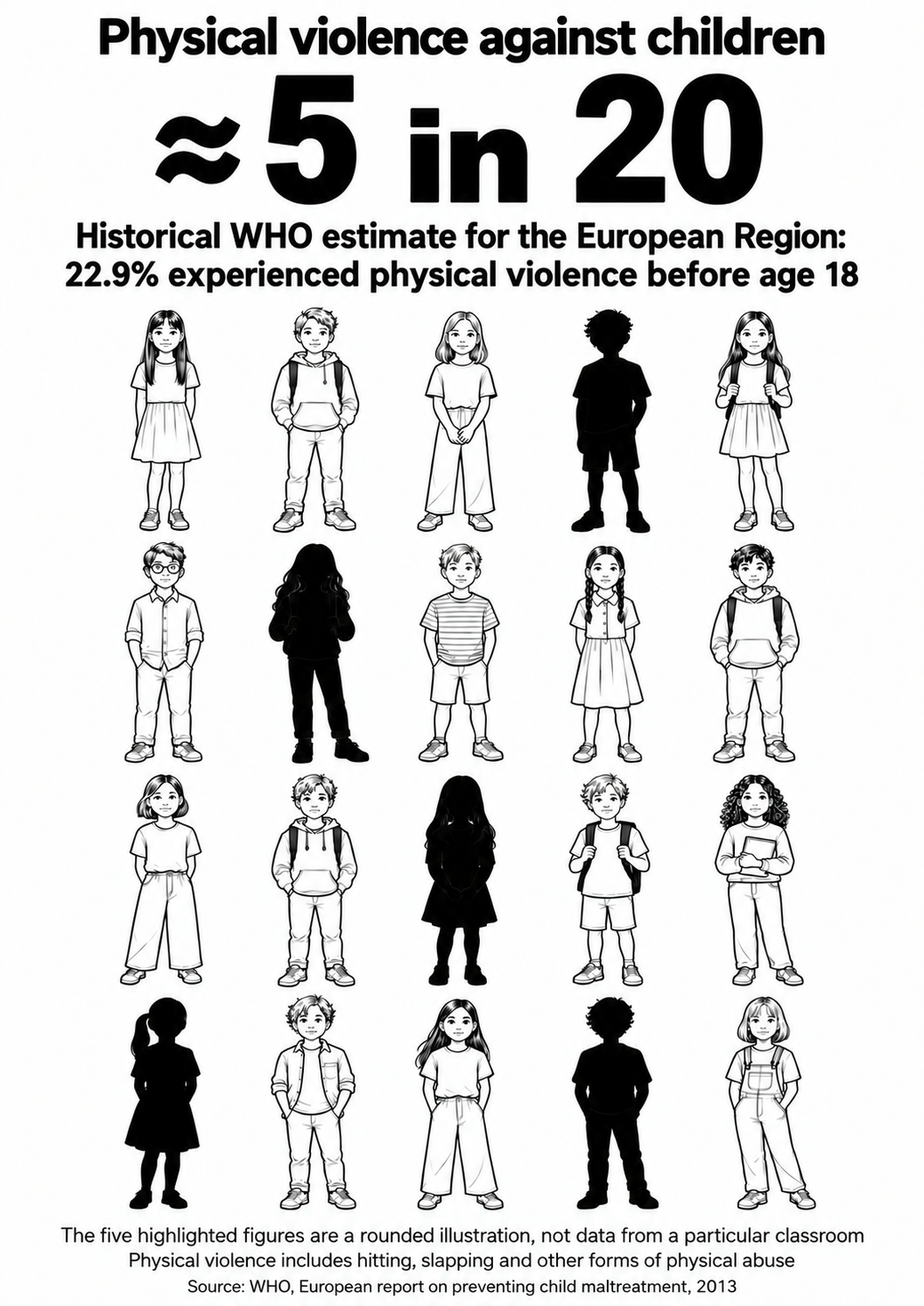
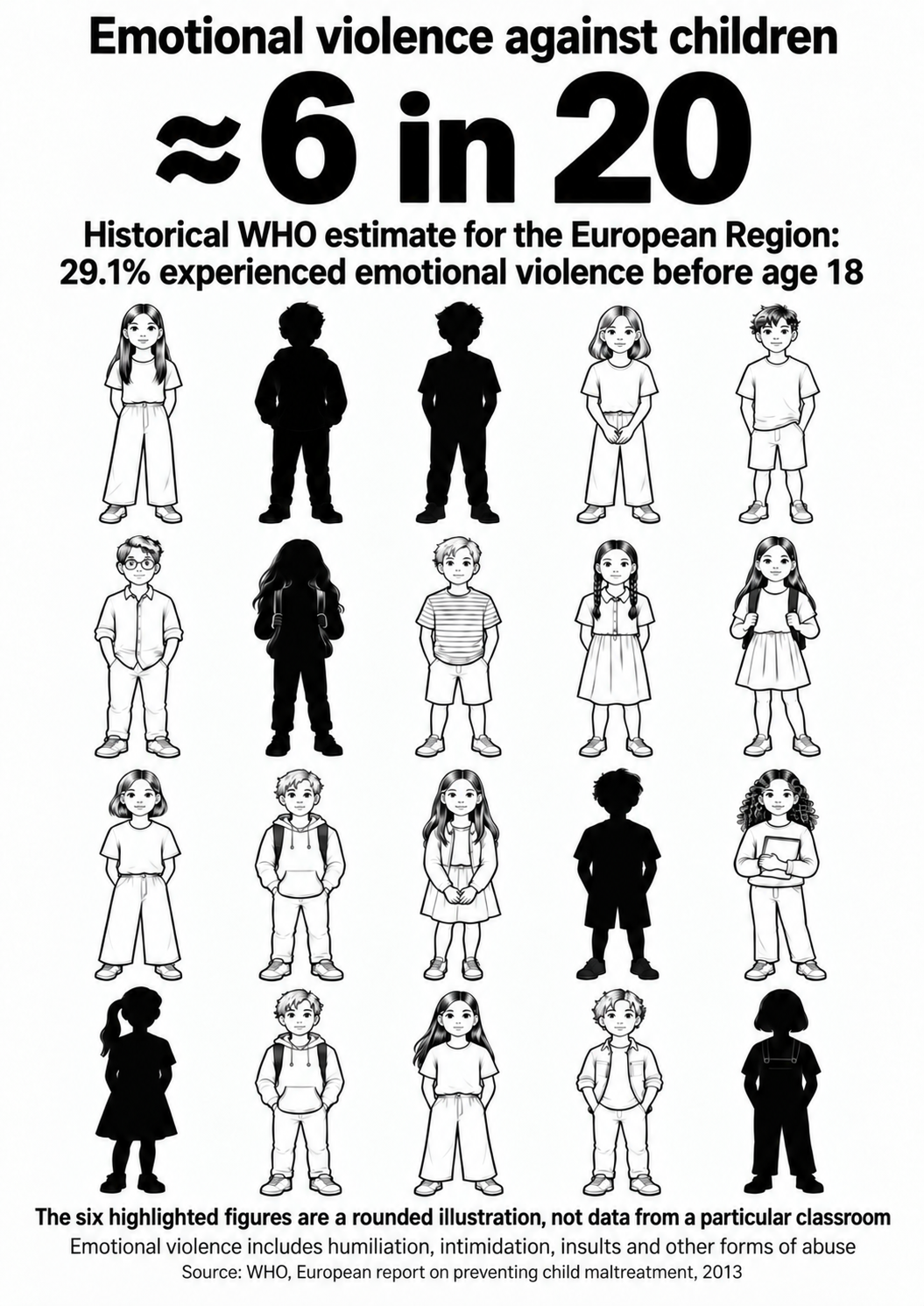
How to read these figures
These are historical estimates published in a 2013 WHO report, not figures for 2026. The highlighted figures are rounded illustrations, not data about any particular class. Different forms of violence can overlap, so the percentages must not be added together. The WHO European Region is not the same as the European Union.
What do studies from different years tell us?
The three posters illustrate estimates published by WHO in 2013: 9.6% of people experienced sexual violence in childhood, 22.9% physical violence, and 29.1% emotional violence. These are not counts of incidents that occurred in 2013. WHO brought together earlier research to show the scale of the problem across its European Region.
More than a decade has passed since then. Do newer findings point to a similar problem? They do. In England and Wales, adults were asked about experiences they had before turning 18. In results published in 2025, 9.1% reported sexual violence, 16.5% physical violence, and 22.7% emotional violence. The figures differ from the WHO estimates, but they again show that these experiences are far from rare.
Other studies offer a picture of what children are experiencing now, rather than only what adults recall years later. A 2025 UNICEF report brought together available data from 15 countries and territories in Europe and Central Asia. Around one in three children experienced physical punishment at home. Depending on the country, psychological aggression by caregivers was reported for 40–69% of children. These measures mainly concern the previous month and include behaviours such as shouting, threats and humiliation.
Eurostat also published findings in 2026 from a European survey of women. About 7% of women surveyed reported sexual violence before the age of 15, 30% emotional violence by parents during childhood, and 13% severe physical violence by parents. This is a reminder that risks do not exist only outside the home: sometimes a child is harmed by an adult on whom they depend.
Why do the percentages differ? Researchers survey people of different ages in different countries and ask about different experiences, from the whole of childhood to physical punishment in the past month. We cannot simply line up these numbers and conclude that violence has increased or decreased. Nor can we add the percentages: the same child may experience several forms of violence.
The posters offer a quick way to grasp the scale of the issue. Newer studies show that the conclusion does not rest on a single source. The exact proportions vary, but the message is consistent: violence against children is widespread and not confined to the high-profile cases we hear about. These figures do not establish one Europe-wide trend of rising or falling violence.
Materials for viewing and printing
The series includes individual PNG posters, a PDF and a PowerPoint presentation. WebP images allow a quick preview on the website; the PDF is opened only when a visitor requests it.
Licence for the project’s original materials: CC BY-NC-SA 4.0. WHO data are credited to their original sources; this does not imply that WHO endorses the project.